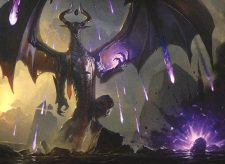
Moonsnare Prototype
Moonsnare Prototype from Kamigawa: Neon Dynasty. Common MTG card for deck building and Commander. View rules, legality, and compare prices from multiple sellers.

Download Full Image ( Card | Crop )
Show All Legalities >>
| Brawl | Legal |
| Commander | Legal |
| Duel | Legal |
| Explorer | Legal |
| Gladiator | Legal |
| Historic | Legal |
| Legacy | Legal |
| Modern | Legal |
| Oathbreaker | Legal |
| Pauper | Legal |
| Paupercommander | Legal |
| Pioneer | Legal |
| Timeless | Legal |
| Vintage | Legal |
| Card Set | Kamigawa: Neon Dynasty |
| Card Type | Artifact |
| Rarity | Common |
| Mana Cost | |
| Card Text | , Tap an untapped artifact or creature you control: Add . Channel — , Discard this card: The owner of target nonland permanent puts it on their choice of the top or bottom of their library. |
| Card Number | #69 |
| Artist | Fariba Khamseh |
| Keywords | Channel |
| Card Languages | Chinese Simplified , Chinese Traditional , English , French , German , Italian , Japanese , Korean , Portuguese (Brazil) , Russian , Spanish |
| Frame Version | 2015 |
| Border Color | Black |
| EDHREC Rank | 6583 |
| Reprint? | No |
| Is Promo? | No |
| Oversized? | No |
| Joke Card? | No |
| In Starter? | No |
| Time Shifted? | No |
| Show More >> | |
| Currently no one is offering this product for sale on mtgcardsbuy.com. Be the first by signing up as a beta vendor! |
3rd Party Listings
Disclosure: The links below are advertisements. We may receive a commission if you click through and make a purchase on eBay.
| 3rd Party Offer | Image | Title | Price | |
|---|---|---|---|---|
|
eBay
|

|
$1.23
|
Card Rulings
2022-02-18If a channel ability requires a target, you may not activate it without a target just to discard the card.
2022-02-18Discarding the card is part of the cost to activate a channel ability.
2022-02-18The owner of that permanent chooses whether it goes on top or bottom. Other players get to know what they chose. In some unusual cases, including melded or mutated creatures, a permanent may consist of multiple cards. In those cases, the permanent's owner puts all cards on top or all cards on bottom. They choose the cards' relative order, and other players don't get to know that order.